
 Warnings
 Construction
 Weather
 Contact
 Search
Ormož
The municipality of
Ormož is part of Prlekija – a region between Mura and Drava – and lies between
the Slovenian-Croatian border and Gornja Radgona and Ptuj. Ormož is renowned
for three exceptional features: wine, pristine nature, and its people. These
combine in a wine culture, cuisine, and customs.
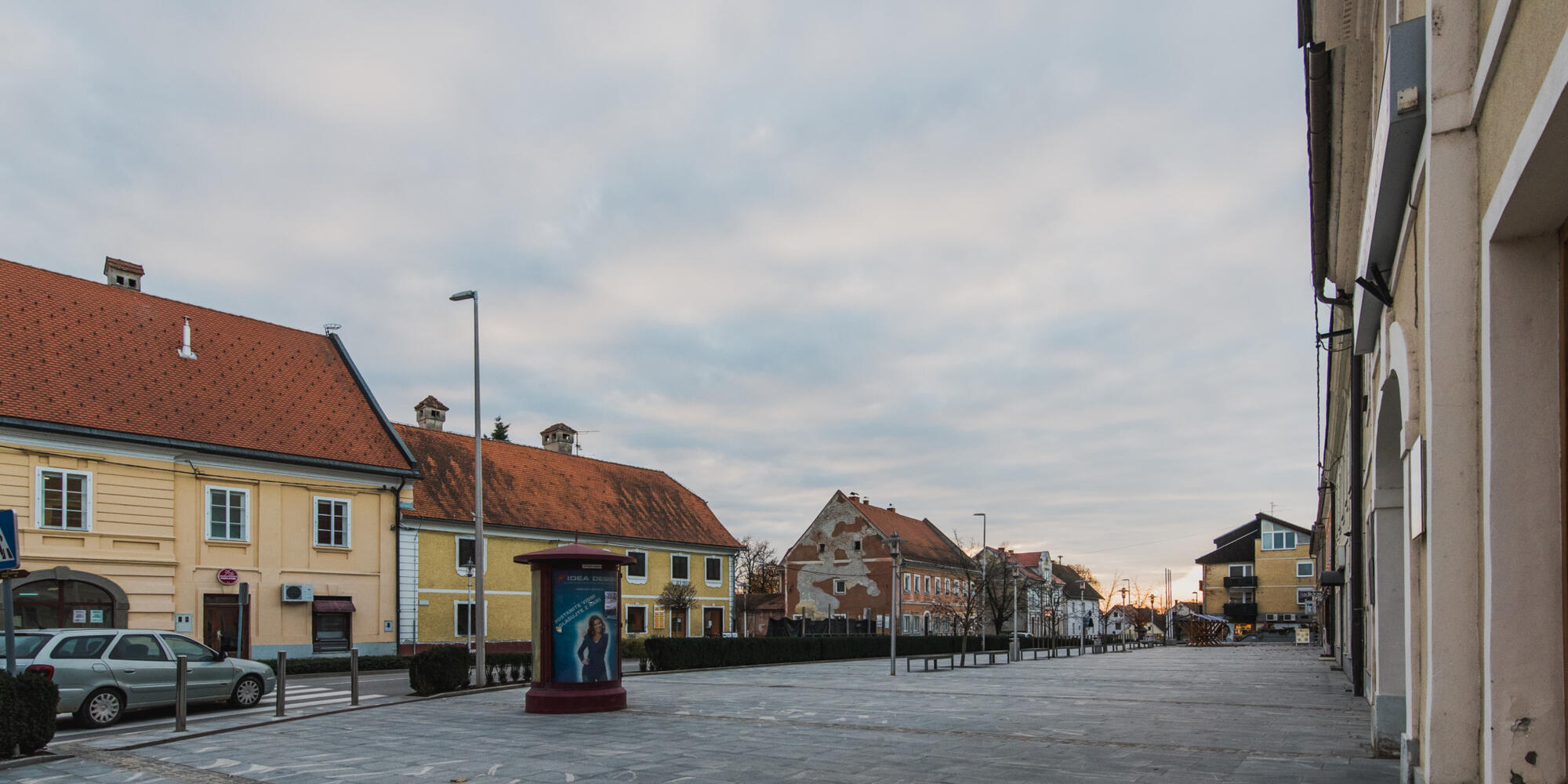
Ormož includes the wider
territory with the flatland and hills. Archaeological findings place this area
among the largest Middle Age prehistoric archaeological sites. Its location
above Drava, with a well preserved mansion, park, church, and urban
arrangement, is too tempting to miss, and warrants a longer stop with a tour of
the local museum collection. Many buildings here have a historical
significance, such as the Turkish Gate, the City Gate, and the Hungarian Gate.
Parks, greens, and the sports park with a pool are all nicely arranged. Many
monuments are well preserved and maintained.
Cultural heritage
Ormož Castle and Manor House
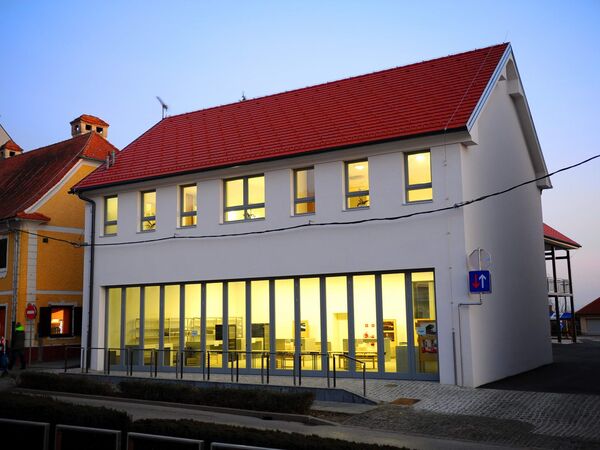
After the extinction of the Ptuj gentry in the 15th century the castle was the property of various noble families, while today the castle rooms serve for the representational needs of the Ormož municipality and the needs of the library, museum, radio, and tourist information centre. Alongside the impressive paintings that belong to the top of classical art in Slovenia, the castle also hosts various exhibitions.
The manor house is a building, which is linked by several commercial buildings, created during various periods from the 18th century on. Various exhibitions are also being exhibited on its premises.
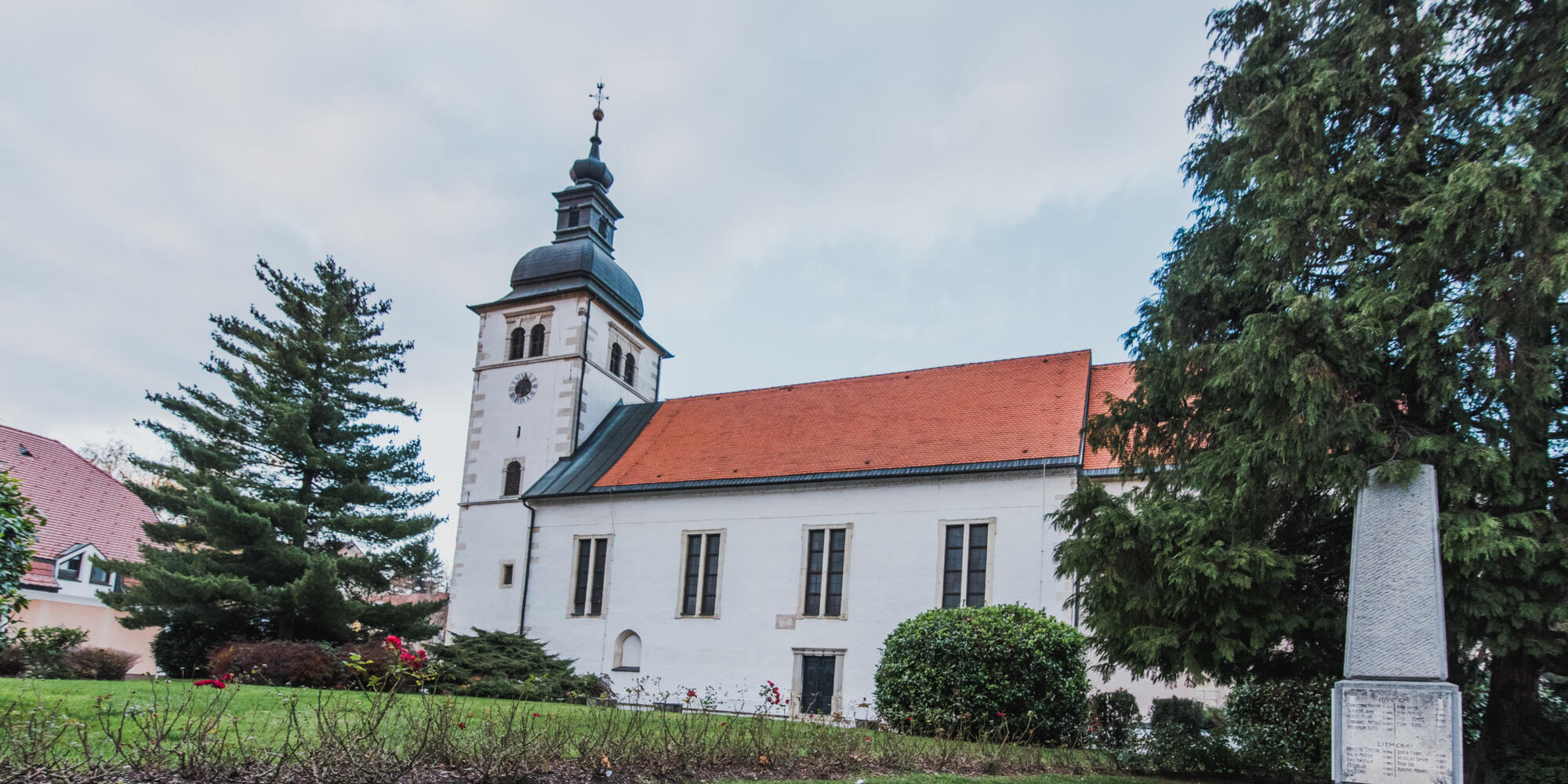
Parish church of St. Jacob
On the eastern edge of the Town Square there is the parish church of St. Jacob. The oldest painting in the church was created sometime in the middle of the 14th century, and then around the year 1630 the expressive composition of the Last Judgment on the triumphal wall. The main decoration of the nave is represented by a painting on its north wall, where 48 scenes from the New and the Old Testament are depicted. Worth seeing is also the baptistery from the 16th century. Opposite the entrance to the church stands a late Baroque Mary's statue.
Velika Nedelja – St. Trinity Castle and Church
According to the legend, the place was named after the battle, which was supposed to take place on the Easter Sunday just before 1200, in which Friderik II, with the help of the German knights’ order, won from the Hungarians the then uninhabited territory and gave it to the knights’ order in appreciation of their help in the battle.
The symbols of its former validity is the parish church of St. Trinity, built shortly after 1200 (the Romanesque apsis houses the oldest baptistery in Slovenia from around 1235) and the castle - an old commendam of the Teutonic order, which was first mentioned in 1273, but is likely to had been created shortly after 1200.
On the castle's premises there is an ethnological collection on display, where through the exhibited objects one learns about the richness of the ethnological tradition in the Ormož area. The castle also has a magnificent castle chapel and the permanent historical exhibition Velika Nedelja through the centuries.
Natural heritage
Ormož Park
After 1910, when the castle came into the possession of the Wurmbrand-Stuppach family, a large English park was planted around the castle with examples of exotic trees. According to its design and diversity, it is one of the most beautiful and one of the few well-preserved castle parks in Slovenia. At the eastern edge of the park, a chapel with the tomb of the last castle owners was built at the beginning of the 20th century, and in front of the castle there is the memorial avenue of the important men of Ormož and its surroundings.
Ormož Wine Road
The wine-growing area along the Ormoš Wine Road extends in two branches. The first one begins in Ormož or on Dobrava and leads through Kogel and Strezetina to Runeče, and from there through Žvab to Pršetinci. The road then continues its way through Koračiški vrh, across Senik, Sodinski vrh and Drakšl to Velika Nedelja. This branch is about 30km long. The other branch of the Wine Road roams from Podgorci to Cvetkovski vrh and across the Bresnica Valley to Zamušanski vrh. It is about 10km long and connected to the Jerusalem Wine Road. On the Ormoška Wine Road we encounter outstanding natural beauties and rich ethnological and cultural-historical heritage. On the slopes of the hills there are still the quite old, wooden wine cellars covered with straw covered – ‘klečaj’.
Jeruzalem Wine Road
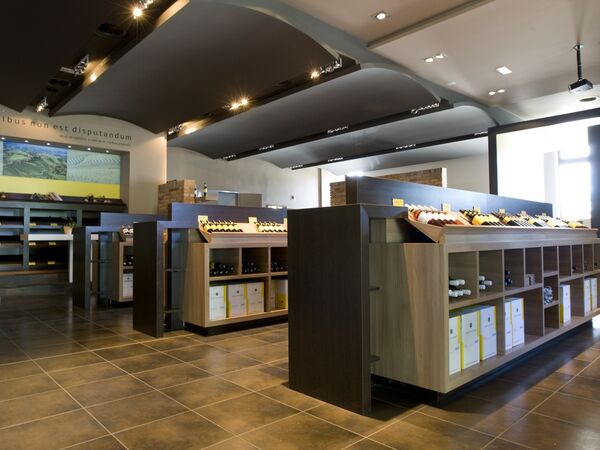
The Jeruzalem Wine Road begins in Ormož, continues to Ivanjkovci, and then through Svetinje to Jeruzalem, on through Miklavž near Ormož to Kog, where it turns back to Miklavž and leads to Ormož. The doors of the Jeruzalem Mansion are opened for everyone who appreciates the harmony of selected dishes and excellent wines, and is surrounded by an arboretum of exotic trees. On the wine road between Svetinje and Jeruzalem there is the Malek vineyard cottage with small wine-growing museums, a large press in the arched basement cellar, and a house chapel with frescoes from the 17th century. More than three hundred years old building, used by former owners as a residence and a farming building for the processing of grapes and wine cultivation, is today converted into a tourist facility that opens the doors to announced groups and individuals. There is also a rich selection of wines and culinary delights in the surrounding wine cellars, wine shops, taverns, and tourist farms. The visitors of the wine road can ride bicycles, horses or a carriage, and walk along marked paths between vineyards.
Ormož Basins Nature Park
The Ormož Basins Nature Park is a 55 hectares large wetland of anthropogenic formation, situated in the area of the ecosystem of the river Drava near Lake Ormož. It is composed of shallow pools with reeds and bulrush, and surrounded by a flooded forest, a rare remnant of the soft-wooded river meadow in Slovenia. The wetland is of exceptional national and international significance for many endangered bird species.
Ormož Basins are an important nesting place of water birds and a key stop for migratory birds in Slovenia; 29 nesting species of water birds, including endangered and rare species have been reported. In the large stands of reeds nests also the brown harrier, a species that can be found only in this region of Slovenia. At the time of migration, 30 species regularly appear, and their number during the migration period can reach tens of thousands of birds.
The vegetation in the natural reserve is managed by the grazing of water buffaloes, which are especially adapted to the aquatic environment and are our indispensable assistant. The Ormož Lake, located in the immediate vicinity, is extremely interesting in all seasons.
The nature reserve with a well-organized infrastructure is open to the public. The quality of the experience of nature is provided by the learning path with observatories and a visitor centre, which is also adapted for groups with special needs, while guided excursions ensure an educational programme for young people and other groups of visitors.
Services nearby (10km)








To spletno mesto uporablja piškotke, ki izboljšajo vašo izkušnjo. Kaj so piškotki?
Nastavitve piškotkov
To spletno mesto uporablja piškotke, ki izboljšajo vašo izkušnjo. Kaj so piškotki?
Zahtevani piškotki
Ti piškotki so nujni za delovanje naše spletne strani in jih ni mogoče izključiti.
Oglaševalski piškotki
Te piškotke lahko na našo stran postavijo oglaševalski partnerji in s pomočjo njih prikažejo relevantne oglase.
Analitični piškotki
Omogočajo anonimizirano zbiranje podatkov o obisku spletne strani. Nastavi jih lahko tretja oseba, katere storitve uporabljamo.